Amazon to eBay Dropshipping: The Complete Beginner Guide
A complete beginner guide to Amazon to eBay Dropshipping covering store setup, product research, eBay listing SEO, inventory routines and fulfillment workflow.
 support@a2edropshipping.com
Updated August 1, 2026 5 min read
On this page
- What Is Amazon to eBay Dropshipping?
- How Does It Actually Work?
- Why This Model Works So Well for Beginners
- 1. No Upfront Inventory Costs
- 2. Low Risk, Low Overhead
- 3. Fast to Launch
- 4. Scalable
- The Profit Model, Explained
- Getting Started: A Beginner's Roadmap
- Common Challenges to Watch For
- Is Amazon to eBay Dropshipping Right for You?
- Final Thoughts
By Zain Ahmad | A2E Dropshipping (Amazon to eBay Dropshipping)
New to Amazon to eBay dropshipping? This beginner guide from A2E Dropshipping breaks down how the model works, how sellers profit, and how to get started the right way.
Topics: amazon to ebay dropshipping, ebay dropshipping guide, dropshipping from amazon to ebay, how to dropship on ebay, beginner dropshipping business model
Hi, I’m Zain Ahmad, founder of A2E Dropshipping. I’ve spent years helping eBay sellers research products, build listings, and manage their stores using the Amazon to eBay model. In this guide, I’ll walk you through exactly how the business works, how the profit is made, and what to watch out for as a beginner.
What Is Amazon to eBay Dropshipping?
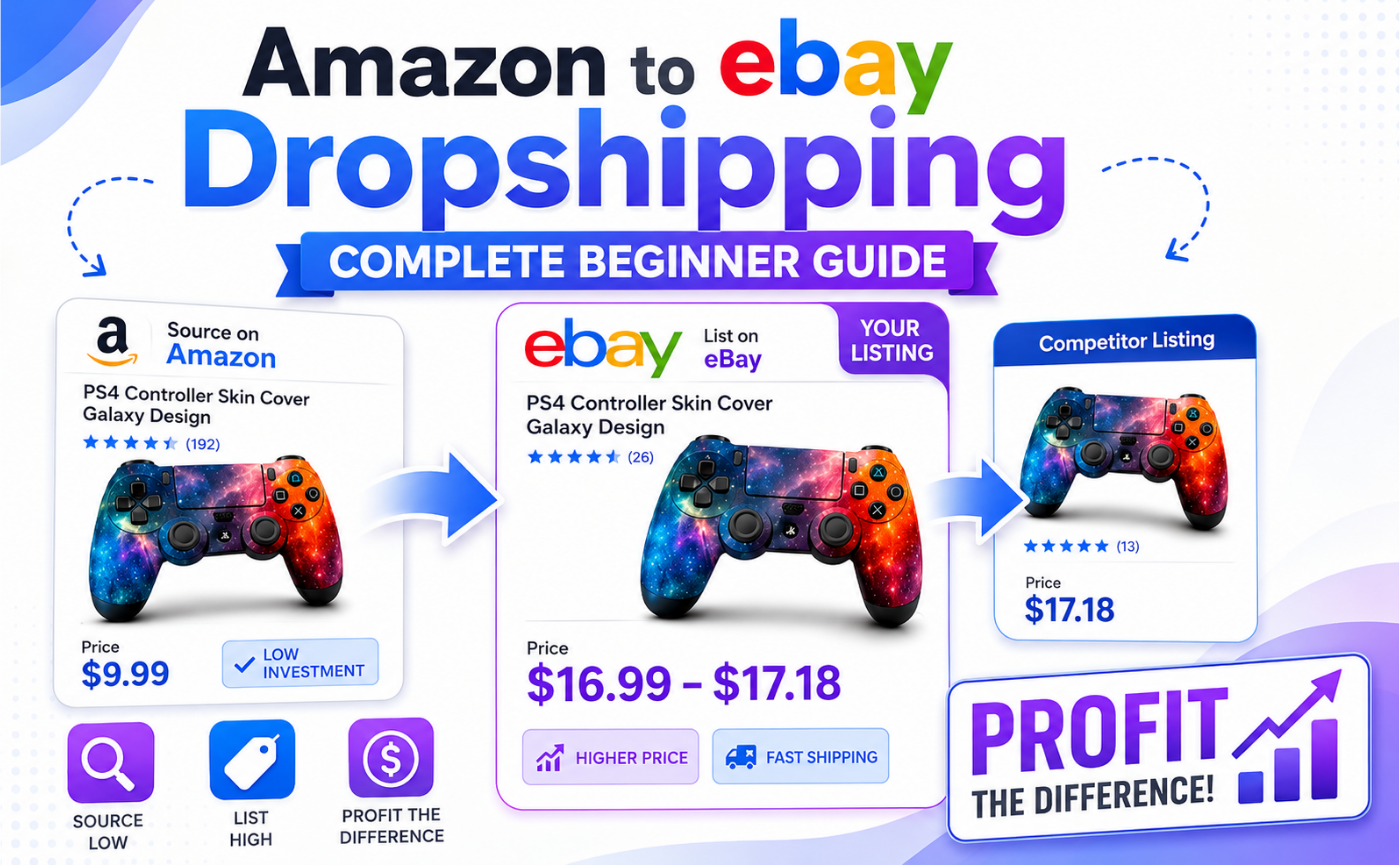
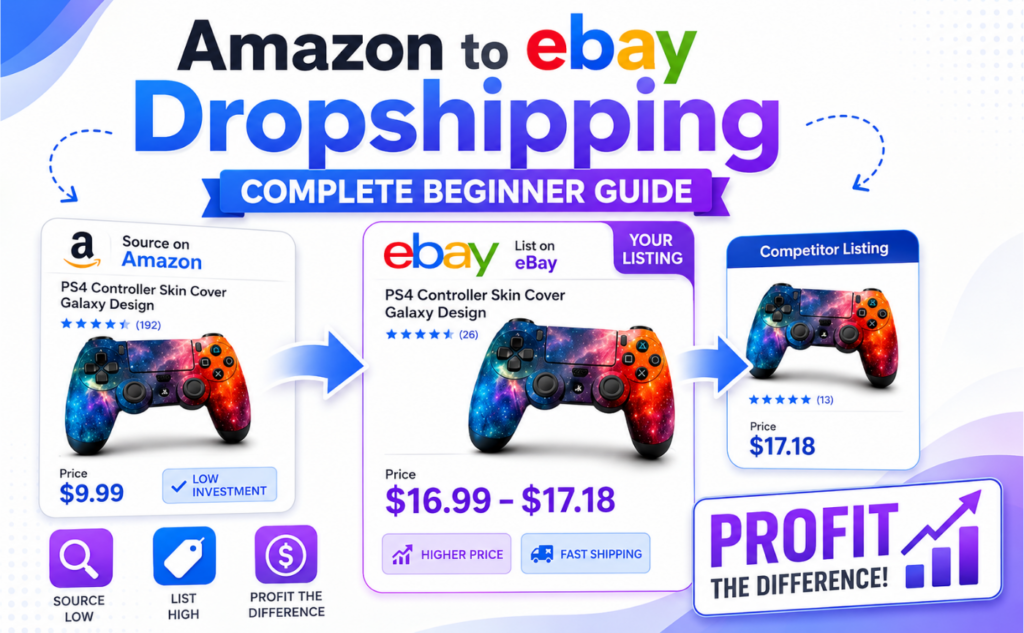
Amazon to eBay dropshipping is a retail arbitrage model that lets you sell products on eBay without ever holding inventory yourself. Instead of buying stock upfront and storing it in a warehouse, you list products that are already available on Amazon directly on your eBay store at a marked-up price.
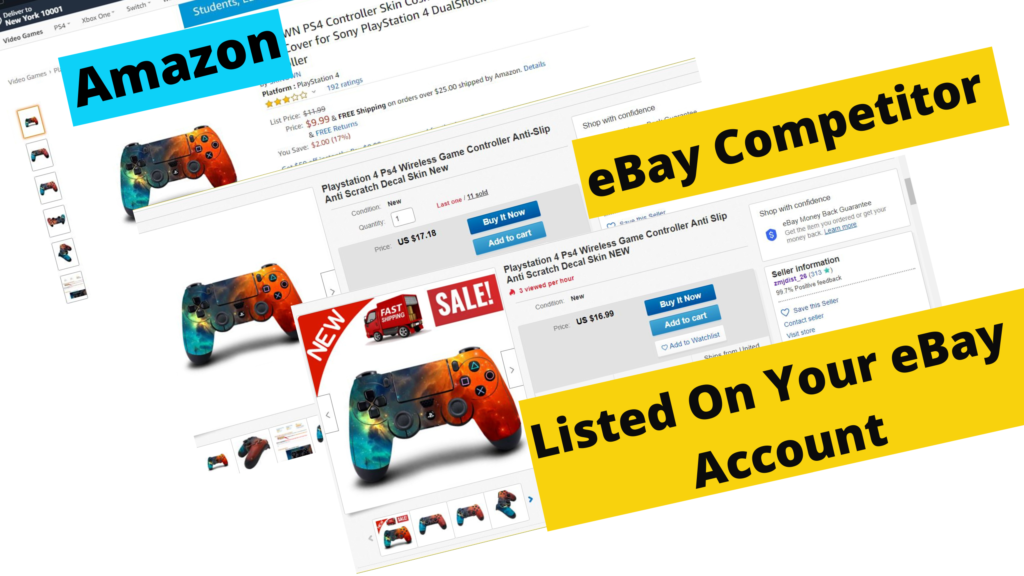
In simple terms: you find a product on Amazon, list it on eBay for more than the Amazon price, and only pay for it once a customer actually buys it from you.
How Does It Actually Work?
The process comes down to four steps:
- List the product. Profitable, in-demand items are researched on Amazon and turned into optimized eBay listings with unique pricing, photos, and descriptions.
- A customer buys on eBay. A shopper finds the listing and places an order, paying the eBay price.
- The order is purchased from Amazon. Once the sale comes in, the product is purchased using an Amazon Prime account and shipped directly to the customer no packing, no storage, no handling required on the seller’s end.
- The seller keeps the difference. Profit is simply the gap between what the customer paid on eBay and what was paid on Amazon.
Because the item ships straight from Amazon to the customer’s door, there’s no need to touch inventory at any point.
Why This Model Works So Well for Beginners
1. No Upfront Inventory Costs
Traditional retail means buying stock before a single sale happens a real risk if products don’t move. With this model, a product is only paid for after it’s already sold, removing the biggest financial barrier to starting an ecommerce business.
2. Low Risk, Low Overhead
There’s no warehouse, no storage fees, and no unsold inventory to worry about. The main investment is time spent on product research and listing management or, for sellers who’d rather not do it themselves, a service like A2E Dropshipping’s research and listing packages.
3. Fast to Launch
Since nothing is being manufactured or sourced from scratch, an eBay store can go live with real listings in days rather than months.
4. Scalable
Once a workflow is in place, adding new listings costs nothing but time (or a listing package); there’s no capital tied up that limits how many products can be listed.
The Profit Model, Explained
Earnings come from the price gap between the two platforms:
Profit = eBay Selling Price - Amazon Purchase Price
For example, if a product costs $25 on Amazon and sells on eBay for $40, that’s $15 in profit before fees. The key to making this model work is:
- Choosing products with consistent demand
- Pricing competitively while preserving margin
- Accounting for eBay and payment processing fees when setting prices
This is exactly the kind of product selection and listing work that determines whether a store is profitable, which is why it’s the first thing I focus on with every client.
Getting Started: A Beginner’s Roadmap
Step 1: Set up an eBay seller account. Choose a store subscription level that matches expected sales volume.
Step 2: Research profitable products. Look for items with strong sales history, positive reviews, and healthy margins after fees.
Step 3: Create optimized eBay listings. Use clear titles, quality images, and descriptions unique from the Amazon listing; this matters for both platform compliance and eBay SEO.
Step 4: Fulfill orders promptly. When a sale comes in, the order is purchased through an Amazon Prime account and shipped directly to the customer’s address.
Step 5: Monitor and optimize. Track which listings sell well, adjust pricing, and remove underperforming products.
If any of these steps feel like too much to manage alone, this is exactly where A2E Dropshipping’s listing and account management packages come in, from a one-time 100-listing package to full A-to-Z account management.
Common Challenges to Watch For
- Price fluctuations on Amazon: can shrink margins if listings aren’t monitored regularly.
- Stock availability: if an item goes out of stock on Amazon after a customer orders, there needs to be a plan for refunds or substitutions.
- Platform policies: both Amazon and eBay have rules around dropshipping, so staying informed helps keep an account in good standing.
- Shipping times: customers expect timely delivery, so factoring in Amazon’s shipping speed matters for maintaining good seller ratings.
- INR cases, returns, and disputes: these are a normal part of running an eBay store and need a consistent process, which is why account management plans include handling for all of them.
Is Amazon to eBay Dropshipping Right for You?
This model is a great fit for sellers who want to:
- Start an ecommerce business with minimal upfront investment
- Test product ideas without buying bulk inventory
- Build a flexible income stream without warehousing or fulfillment overhead
It’s less suited to sellers looking to build a long-term brand around their own unique products, since it relies on reselling items already available elsewhere.
Final Thoughts
Amazon to eBay dropshipping remains one of the most accessible ways to start an online business. By listing in-demand Amazon products on eBay and fulfilling orders only after they’re purchased, sellers can build a profitable store with low risk and minimal startup costs. Success comes down to smart product research, consistent monitoring, and a solid process for handling the day-to-day of running a store.
If you’d rather skip the trial and error, take a look at our pricing and packages from a single research-and-listing batch to full account management; we’ve built A2E Dropshipping around exactly the workflow covered in this guide.
Zain Ahmad (Founder Of A2E Dropshipping)

Part of the A2E Dropshipping team, helping eBay sellers research, list and grow since 2018.